
Sub-Total: £0.00
Creative ADHD brains generate ideas constantly but not every idea needs to become a fully realised project

May Cadman is an ADHD coach. Here, she writes about her creative upbringing, how her son’s ADHD diagnosis led to her own exploration of neurodivergence and the creative strengths of an ADHD mind
Written by May Cadman
I grew up in a very creative family – actors, artists and designers – surrounded by big ideas and imaginative energy. Creativity was simply part of everyday life. As a child I had freedom to explore and create, and my dreamy nature and big emotions were usually met with empathy rather than correction.
My childhood felt completely normal.
But alongside the creativity there were also challenges. Our bohemian life was wonderful and creative, yet emotionally it could be intense and unpredictable. By my teenage years anxiety had crept in quietly and I began experiencing panic attacks, though at the time I simply assumed that was just part of my personality.
In my early twenties I channelled my creativity and energy into a bespoke cake business. I was just 23 when I started it, and it quickly grew into a successful company. The work was hugely creative and incredibly rewarding, but it was also non-stop. A wedding cake can’t be late, so every week ended with deadlines that simply could not move.
There were parts of the business where I thrived – designing cakes, working with clients and bringing ideas to life. But other aspects felt almost impossibly difficult. The tasks that interested me flowed easily and organically; the ones that didn’t felt like trying to swim upstream.
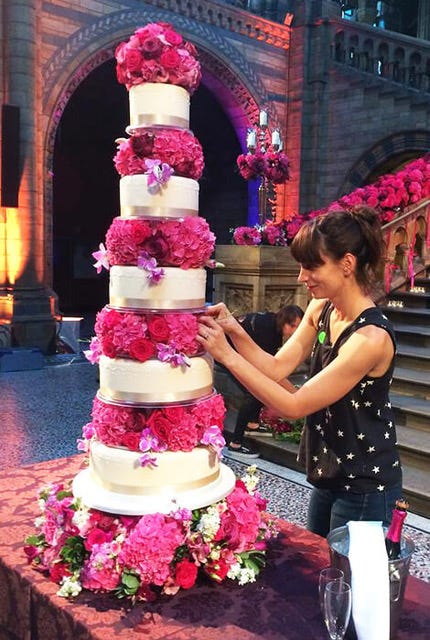
Looking back, burnout and masking became a regular rhythm in my life. At the time I attributed it to stress and the sheer demands of running a business. I had no framework for understanding that something deeper might be going on. It was only much later that I began to understand why.
My son was diagnosed with ADHD at the age of ten, and it was while reading through his diagnostic report that something unexpected happened. As I moved through the descriptions of emotional dysregulation and overwhelm, I felt an uncomfortable sense of recognition. I had started reading to understand him, but increasingly it felt as though I was reading about myself.
I wanted to understand everything I could about ADHD – initially for my son, but the more I learned, the more pieces of my own life began to fall into place. My heightened emotions. My dysregulation. My struggles at school. And as I’ve learned more about neurodivergence, it’s as if a light has been switched on. Suddenly my past made far more sense.
As I learned more about ADHD, I came across coaching and eventually went on to train as an ADHD coach myself. What surprised me most was how practical and accessible the changes could be. Coaching helped me begin to understand my brain in a completely different way. Instead of seeing my challenges as failures, I started to see patterns – and with that came the ability to work with them rather than constantly fighting against them.
It was through this process that I began to recognise patterns that show up again and again in creative people. One of the most obvious is idea abundance. Creative ADHD brains generate ideas constantly. When I ran my cake business I was always thinking of something new – designs I wanted to try, books I might write, directions the business could grow. Some of those ideas became reality. Others quietly fell away. For a long time I saw this as a personal failure. Why couldn’t I follow through on every idea I had?
Only later did I realise that the problem wasn’t a lack of discipline – it was the sheer volume of ideas. ADHD brains are extraordinarily good at generating possibilities but not every idea needs to become a fully realised project. With that constant stream of ideas can also come overwhelm and a kind of analysis paralysis about where to begin. These days I’m much more comfortable letting ideas come and go. Some are worth pursuing. Others are simply part of the creative process.
What once felt like personal shortcomings now look far more like traits of a brain that simply works differently.
Another pattern I began to recognise was the challenge of getting things done. Starting something new can feel exciting and energising, particularly when curiosity and interest are involved. But finishing – especially when the novelty fades – can be much harder. What I now understand as ‘interest as fuel’ was something I experienced constantly while running my business.
Perfectionism is another trait I see frequently in creative ADHD minds. Many people assume ADHD means carelessness or a lack of attention to detail. In reality, the opposite can often be true. When we care about something, we care deeply. The desire to produce work that feels ‘right’ can become paralysing – not only making it difficult to start, but also making it hard to know when something is finished.
It’s easy to slip into hyperfocus trying to get things just right, long after they are already good enough. Hyperfocus is the extraordinary ability to become completely absorbed in something that captures our interest. It can be a remarkable creative strength. It allows hours of work to pass unnoticed and ideas to develop in rich, detailed ways.
Another insight that helped me make sense of my creative life came from discovering my character strengths. As part of my ADHD coaching journey I completed a strengths assessment and learned that my top strength was, quite simply, love. Suddenly my years working in the wedding industry made perfect sense. I had always loved weddings and, perhaps more importantly, I love love. I’m a big believer in it.
Realising this helped me understand something important about neurodivergent creativity: we often thrive when our work aligns with what genuinely energises us. Seeing these patterns through a different lens has been one of the most powerful shifts for me. What once felt like personal shortcomings now look far more like traits of a brain that simply works differently.
Neurodivergent creativity is powerful. It brings curiosity, passion and the ability to see the world differently.
One of the most important things I have learned is that ADHD isn’t really an issue with attention, despite what the label might suggest. It’s much more about regulating and directing attention. Our focus is drawn strongly toward the things that interest us, while the things that don’t can feel almost physically difficult to engage with. Understanding this changed everything. Instead of constantly trying to force myself to operate like everyone else, I began creating structures that supported the way my mind naturally works.
But perhaps the most important shift of all was self-compassion.
For years I had interpreted my struggles as personal shortcomings. Learning about ADHD helped me see that many of the things I had criticised myself for were simply characteristics of a different kind of brain. Sometimes I think of it like driving a supercar at full throttle. A supercar uses more fuel than a small city car — and it needs to refuel more often.
In the same way, a brain that runs at high emotional intensity simply needs more regular recovery. Sometimes the solution can be surprisingly simple: a cup of tea, five minutes in the sun, stepping away briefly from hyperfocus.
Small things. But powerful once you understand why they matter.
Coaching taught me that small, intentional shifts can make a meaningful difference: creating structure where it’s needed, following interest where it leads, and, perhaps most importantly, approaching it all with a greater sense of self-compassion.
Neurodivergent creativity is powerful. It brings curiosity, passion and the ability to see the world differently. But like any powerful force, it needs understanding and support. And perhaps now, more than ever, the world needs exactly that kind of creativity.
Our mission, here at We Hyperfocus, is to change the narrative around neurodivergence and creativity.
It feels like the most powerful way to do that is by profiling the neurodivergent creatives themselves.
Highlighting both the challenges and strengths of a mind that works differently.
So, that’s what We Hyperfocus Magazine is all about.
And we really need your support.
You can support We Hyperfocus over on Substack…
for £3.50/month or £35/year here: wehyperfocus.substack.com/subscribe
for £1.75/month or £17.50/year here: wehyperfocus.substack.com/alittleless
for 88p/month or £8.75/year here: wehyperfocus.substack.com/everypennycounts
Thank you for reading, and supporting.
Annie x